Bingo is the oldest social game in Canadian gambling, and it moved online years ago. The good news: the maths is simple, the cards are cheap and the provincial lottery sites run real rooms with chat. The catch is just as simple. Every card in a room has the same shot, so the room size decides your odds far more than any pattern or card choice. Here’s how the main formats work, what the numbers really say, and where bingo sits for players in Canada.
- Three main formats: 75-ball (5x5 card, 24 numbers), 80-ball (4x4, 16 numbers) and 90-ball (15 numbers per ticket).
- Room size is the odds: with equal cards, your share of the cards is your share of the chance.
- Provincial sites run bingo: PlayNow in B.C. and Manitoba, and Loto-Québec, list online bingo rooms.
- Our casino list: none of the records we researched shows bingo, so check the lobby before you sign up.
How online bingo works
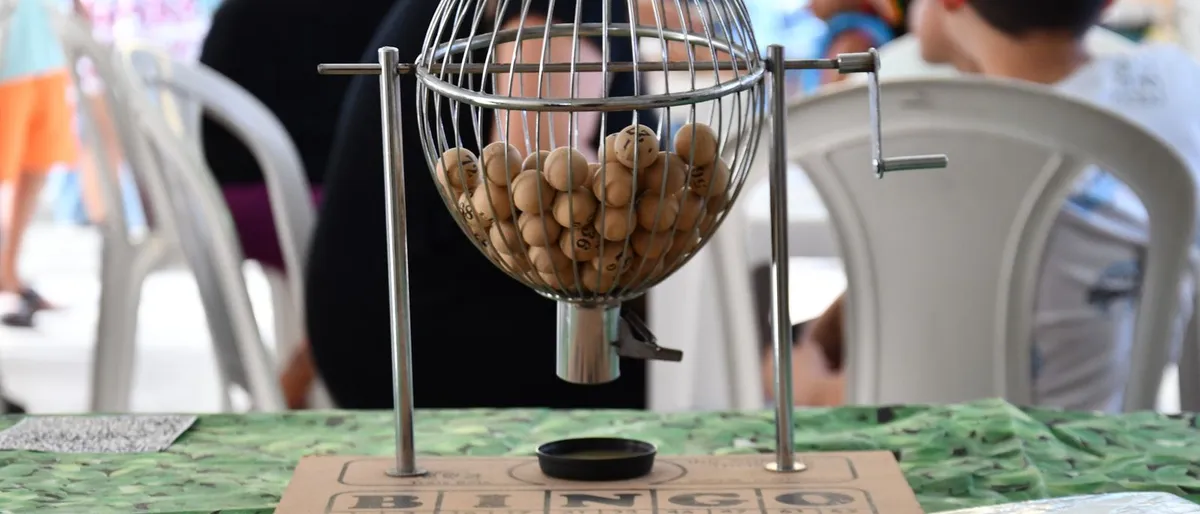
An online bingo room runs on a schedule. You buy cards before the game starts, numbers are drawn by a random number generator, and the software marks your cards for you. The first player to complete the winning pattern takes the prize, and ties usually split it. Rooms often add chat, a host and progressive jackpots tied to finishing within a set number of calls.
What separates the formats is the size of the ball pool and the card. Fewer numbers to cover means a faster game; a bigger pool means more calls before anyone wins.
| Format | Card | Numbers on card | Ball pool | Typical prizes |
|---|---|---|---|---|
| 75-ball | 5x5 grid, free centre square | 24 | 1-75 | Line, column or diagonal; patterns; blackout (coverall) |
| 80-ball | 4x4 grid, four colour columns | 16 | 1-80 | Lines, four corners, full house |
| 90-ball | 3 rows x 9 columns, 5 numbers per row | 15 | 1-90 | One line, two lines, full house |
Sources: 75-ball and 90-ball layouts from standard game references; 80-ball layout from operator game guides (rules vary by room).
🎰 75-ball bingo: the North American game
The 75-ball card has five columns headed B-I-N-G-O. Each column draws from its own band of 15 numbers: B holds 1-15, I holds 16-30, N holds 31-45, G holds 46-60 and O holds 61-75. The centre square is free, so a card carries 24 numbers. Quebec’s long-standing bingo rules describe the same 75-ball, 5x5 game.
The appeal is the patterns. Besides straight lines, rooms run shapes such as four corners or a small square, and the big prize is usually the blackout: all 24 numbers. B.C.’s PlayNow says two of its rooms, Suite 75 and Coast to Coast, use this traditional 75-ball game.
90-ball and 80-ball bingo
90-ball is the UK-style game. Each ticket has 27 spaces in three rows and nine columns, with five numbers per row and 15 in total. Tickets come in strips of six, and a full strip holds every number from 1 to 90 once, so every call marks something. Prizes run in stages: one line, then two lines, then the full house.
80-ball sits in between: a 4x4 card of 16 numbers split into four colour-coded columns of 20 numbers each. Rooms pay for lines, four corners and the full house, though pattern lists differ from room to room. Some suppliers also run faster 30-ball and 50-ball games; Pragmatic Play’s bingo product is reported with 30, 50, 75, 80 and 90-ball variants.
🧮 The odds: what the numbers say
Bingo odds have two layers: how fast one card fills, and how many other cards are racing it.
One card on its own. The chance that every number on your card has been called within the first N calls is C(N, k) / C(T, k), where k is the numbers on your card and T is the ball pool. The average number of calls before one card is complete is k(T+1)/(k+1).
🧮 Calls needed, on average, for one card's full house
| 75-ball blackout (24 numbers) | 73.0 of 75 calls |
|---|---|
| 80-ball (16 numbers) | 76.2 of 80 calls |
| 90-ball (15 numbers) | 85.3 of 90 calls |
Those averages look slow, and for a single card they are. A lone 90-ball ticket is complete by call 70 only about 1.6% of the time, and a lone 75-ball card hits blackout by call 60 about 0.14% of the time.
| Chance one card is complete by… | Call 60 | Call 70 | Call 80 |
|---|---|---|---|
| 90-ball ticket (15 numbers) | 0.116% | 1.58% | 14.5% |
| 75-ball blackout (24 numbers) | 0.140% | 13.6% | all called by 75 |
| 80-ball card (16 numbers) | 0.555% | 9.20% | 100% |
Source: BonusMadness calculation, hypergeometric formula C(N, k) / C(T, k).
Many cards in a room. Games end far sooner than these averages because hundreds of cards are racing. That’s also why big rooms feel quick and small rooms feel slow. With one prize and equal cards, every card has the same chance, so your share of the chance equals your share of the cards.
There is no pattern, number choice or “lucky card” that shifts this. Every card is a random draw from the same pool. What you can choose is the room: quieter rooms mean fewer rival cards but usually smaller prizes, because prize pools tend to grow with ticket sales.
🍁 Provincial bingo sites
Outside Ontario and Alberta, the provincial lottery corporation is the only operator authorised to run online gambling in each province; B.C.’s government page calls PlayNow.com the only legal online gambling site in B.C. Several of those provincial sites run bingo:
| Province | Provincial site | What we found (October 2026) |
|---|---|---|
| British Columbia | PlayNow | Bingo rooms Moonlight Diamonds, Suite 75, Stardust and Coast to Coast; Suite 75 and Coast to Coast are 75-ball; players located in B.C. only |
| Manitoba | PlayNow (Manitoba) | Live bingo, played head-to-head with players in Manitoba, B.C. and Quebec |
| Quebec | Loto-Québec | Online bingo halls, virtual rooms and chat, 18+; separately, networked hall bingo twice a day with a C$35,000 jackpot, profits to non-profits |
Sources: playnow.com bingo page; Manitoba Liquor & Lotteries PlayNow backgrounder (March 2023); Loto-Québec online offer and bingo en réseau pages.
Atlantic Lottery’s alc.ca also describes online bingo as part of its range, but we couldn’t open its bingo pages to confirm the rooms, so we leave the details out. For the full picture by province, see our guides to online gambling in British Columbia, Manitoba, Quebec and Nova Scotia and Atlantic Canada, plus our overview of the law on online gambling across Canada.
Bingo at offshore casinos
The casinos on our list serve players aged 19 or over outside Ontario and Alberta and are licensed outside Canada, so provincial consumer protections don’t apply to them. We read their game lobbies and terms for our reviews, and none of the 19 casinos on our list shows bingo in our research records. Their libraries are built on slots, live dealer tables and classic table games, so we don’t claim bingo at any of them.
If you’re after a bingo-style draw at those casinos, keno is the nearest relative: numbers drawn from a pool, matched against your picks. It costs more than it looks, though, and our keno odds guide does the maths on why. For lower-edge play, slots with a high RTP or a well-played blackjack hand return far more of each dollar staked over time.
Bingo and casino bonuses
Bonus terms at offshore casinos are written around slots. Slots count 100% toward wagering almost everywhere, while other games count less or are excluded, and the terms we read list game weighting game by game. If a casino ever adds bingo, check whether it appears in the contribution table at all before you claim a bonus with bingo in mind. Our wagering requirements guide explains game weighting, and the wagering calculator shows the total bets an offer needs. The welcome bonus listing shows the current offers and their terms.
Playing bingo with a budget
Bingo’s social side makes long sessions easy, and cheap cards add up across a night of games. A few habits keep it in check:
- Set a session budget before the first game, and count every card in every game against it.
- Mind auto-buy. Pre-buying cards for future games is convenient, but it spends money before you’ve decided to play those games.
- Treat jackpots as a bonus, not a plan. A jackpot that needs a full house in a small number of calls is, by the maths above, rare for any single card.
- Use the provincial tools. B.C.’s Game Break self-exclusion covers bingo halls and PlayNow.com, and provincial sites offer deposit limits.
If bingo stops being fun, our responsible gambling page lists every provincial helpline, and help is free and confidential. You must be 19 or over to use the casinos we list.
FAQ
What is the difference between 75-ball and 90-ball bingo?
75-ball is the North American game: a 5x5 card with a free centre square and 24 numbers, won on lines, patterns or a blackout. 90-ball is the UK-style game: a ticket of three rows and nine columns holding 15 numbers, with prizes for one line, two lines and a full house.
Where can I play online bingo legally in my province?
Provincial lottery sites run online bingo. B.C.'s PlayNow has bingo rooms for players located in B.C., Manitoba's PlayNow lists live bingo shared with players in B.C. and Quebec, and Loto-Québec lists online bingo halls for players 18 and over. Check your provincial lottery site for current rooms.
Do the casinos on BonusMadness offer bingo?
None of the casino records we researched lists bingo, so we don't claim any of them carries it. Their lobbies are built around slots, live dealer games and table games. If bingo is the main reason you play, a provincial lottery site is where we found bingo rooms in October 2026.
How many calls does a 90-ball full house take?
For one ticket, the average is about 85 calls out of 90, from the formula k(T+1)/(k+1) with 15 numbers and 90 balls. The chance that one ticket is complete by call 70 is about 1.6%. In a busy room someone usually finishes much earlier, because many tickets are in play.
Does buying more bingo cards improve my odds?
Yes, in proportion: with one prize and equal cards, your chance is roughly your cards divided by all cards in play. Ten cards out of 200 is about 5%. Your cost rises by the same proportion, so the price of each chance stays the same. Set a budget before the game starts.